
Organisational Development.
Psychosocial Risk & Capability
We partner with business leaders to embed practical, evidence-based strategies that protect psychological health, strengthen leadership capability, and reduce operational risk exposure — without compromising performance.
No junior consultants. No generic playbooks. Psychologist-led.
Owner-to-owner partnership. Appropriate & tailored solutions.
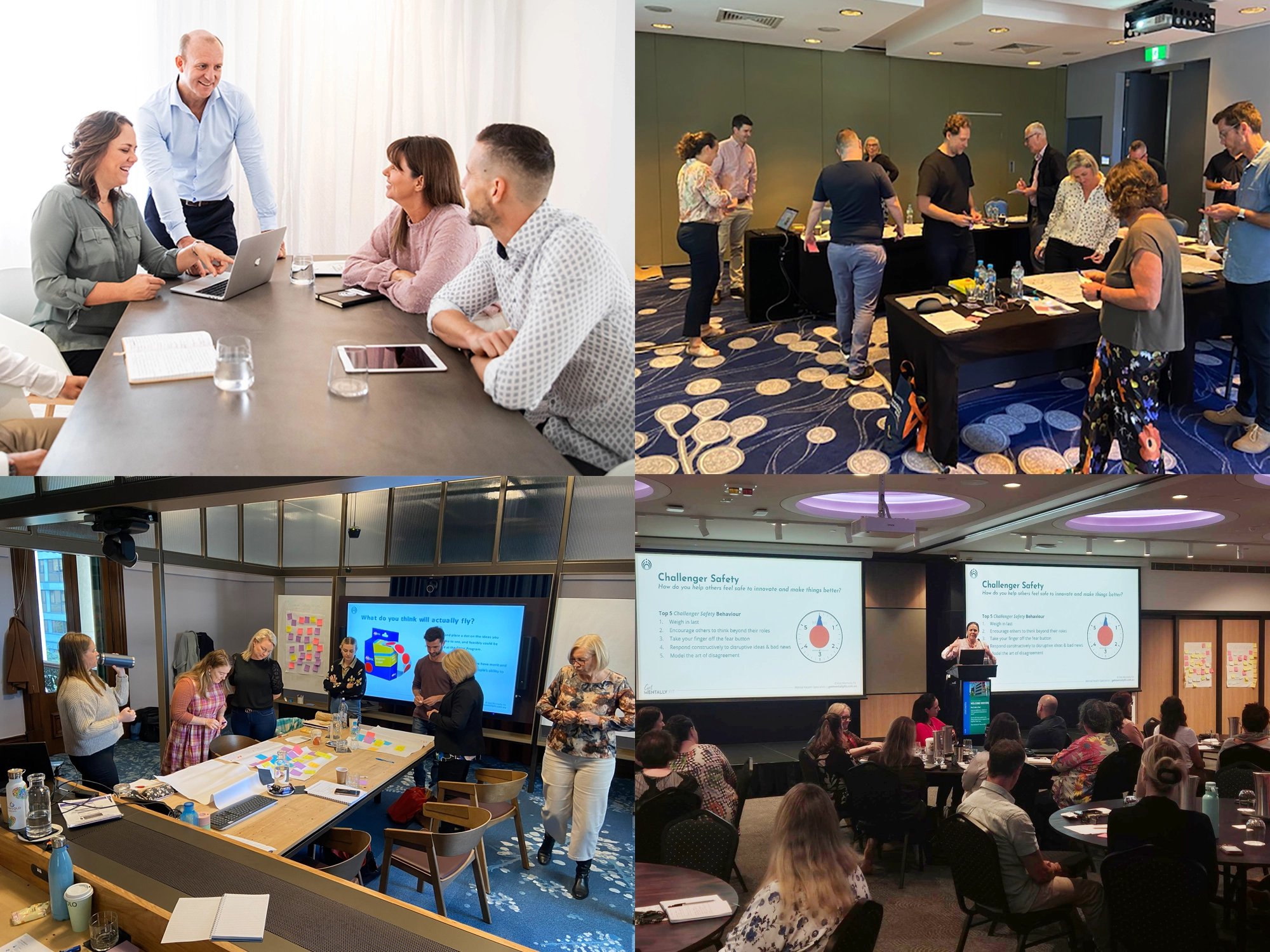
TRUSTED BY LEADING AUSTRALIAN ORGANISATIONS
































A high-touch, Psychologist-led partnership
Unlike large, more expensive, consulting firms we don't handball projects to external consultants. Our clients get appropriate solutions that satisfy their complex needs and commercial reality.
Core Oganisational Development Areas
We combine organisational psychology, governance insight, and practical implementation to design strategic interventions that protect people and performance.
Workforce Wellbeing & Culture Strategy
Move beyond ad hoc wellbeing initiatives and skills training to a measurable, strategic approach. Align culture, leadership, and staff wellbeing into a single defensible system.
Leadership Capability & Mental Fitness
Strengthening how leaders think, regulate, and respond under pressure. Building the behavioural controls that assure productivity and manage psychosocial risk at the source.
Psychosocial Risk Management
Assess and manage psychosocial hazards in line with regulatory requirements. Hazard identification, risk assessment, control planning, and audit-ready documentation.
The Australian workplace reality
These numbers show why proactive organisational development is a governance and
productivity imperative, not an optional feel good.
Annual cost of absenteeism alone due to poor mental health for Australian employers (Safe Work Australia - 2026)
Total cost for an SME to replace a mid-level manager earning $100k, once recruitment, training, and productivity gaps are factored (Safe Work Australia - 2026)
Median time lost from work for a mental health claim in Qld - nearly 5x the operational disruption caused by physical injuries (Safe Work Australia/WorkSafe QLD)
Estimated annual cost of presenteeism (working while unwell or disengaged) to Australian businesses - 3X the drain of absenteeism (Scale Suite/DHS - 2026)
The business case for action
Investing in proactive psychosocial risk management and workforce capability building helps you:
- Protect your people from psychological harm
- Strengthen compliance with WHS obligations
- Safeguard organisational reputation
- Improve engagement and attract talent
- Reduce injury-related costs and WorkCover premiums
- Build long-term organisational resilience
This is not simply a wellbeing initiative — it is a governance imperative.
What Our Clients Say












Credentials you can trust
Our AHPRA-registered psychologists, bound by the Psychology Board of Australia's Code of Ethics, lead our commitment to providing psychologically informed support that goes beyond generic initiatives.


Workplace consulting & psychosocial risk FAQs
Answers on psychosocial risk consulting, legal requirements, ROI measurement, and when to engage a workplace safety consultant.
What is workplace consulting in the context of psychosocial risk?
Workplace consulting at Get Mentally Fit goes beyond standard HR advice. We partner with organisations to operationalise psychosocial WHS obligations. This involves identifying psychological hazards, assessing risk exposure, and implementing evidence-based control measures — such as leadership training and cultural shifts — to ensure your business remains compliant while protecting employee performance.
How can a workplace psychologist help manage psychosocial hazards?
A workplace psychologist brings clinical diagnostic skills to identify the root psychological drivers of organisational dysfunction — not just surface symptoms. We use validated assessment tools, evidence-based frameworks, and organisational psychology expertise to identify psychosocial hazards, assess their severity, design targeted controls aligned to the hierarchy of controls, and build leadership capability as a primary risk control measure.
What are the legal requirements for psychosocial safety in Australian workplaces?
Under Australian WHS legislation, all PCBUs must identify, assess, control and evaluate psychosocial hazards with the same rigour applied to physical safety risks. Officers carry personal liability for failures. Safe Work Australia's Model Code of Practice provides the framework, requiring hazard identification, risk assessment, implementing controls following the hierarchy of controls, and ongoing monitoring and review. Non-compliance can result in significant penalties and personal liability.
Why is leadership capability considered a critical risk control measure?
Psychosocial risk doesn't escalate in policy documents — it escalates in leadership moments. How a leader responds to pressure, manages conflict, communicates change, and supports their team directly determines whether psychosocial hazards are managed early or allowed to grow. Strengthening leadership behaviour is a higher-order control that addresses risk at the source, rather than relying solely on lower-order controls like EAP or awareness training.
How do you measure the ROI of workplace wellbeing and consulting?
We measure ROI across multiple dimensions: reduction in absenteeism and presenteeism costs, decreased psychological injury claims and WorkCover premiums, improved engagement and retention rates, reduced time leaders spend managing crises, and evidence of behavioural shift through pre/post psychometric assessment. Research consistently shows an average return of $2.30 to $4.00 for every $1 invested in evidence-based workplace psychological interventions.
What is the difference between a wellbeing program and a psychosocial risk strategy?
A wellbeing program typically focuses on individual-level interventions — apps, fitness challenges, awareness sessions. A psychosocial risk strategy addresses the systemic organisational factors that create psychological harm: work design, leadership behaviour, role clarity, change management, and interpersonal dynamics. Wellbeing programs are a lower-order control. A psychosocial risk strategy addresses hazards at the source — which is what regulators expect.
When should our organisation engage a workplace safety consultant?
The best time to engage is proactively — before issues escalate into claims, grievances, or regulatory scrutiny. Key trigger points include rising absenteeism or turnover, upcoming restructures, leadership transitions, psychosocial hazard complaints, preparing for WHS audit, and wanting to shift from reactive crisis management to proactive prevention. However, we also support organisations already facing acute challenges where immediate expert intervention is needed.